
The Southeastern Conference has taken a major step in the ongoing debate over college athlete eligibility by approving a new policy that prevents certain former professional athletes from returning to compete for SEC schools.
The rule, approved unanimously by conference leadership, specifically targets athletes who previously entered the NFL, NBA or WNBA professional pathway and later attempt to return to college sports.
SEC Approves New Professional Eligibility Restriction
The policy received unanimous approval, with SEC presidents, chancellors and athletic directors voting 16-0 in favor.
Under the new rule, SEC schools will not be permitted to place on their rosters athletes who have previously taken certain steps into professional football or basketball. The restriction applies to players who have declared for the NFL, NBA or WNBA drafts, signed contracts with those leagues or appeared on professional rosters.
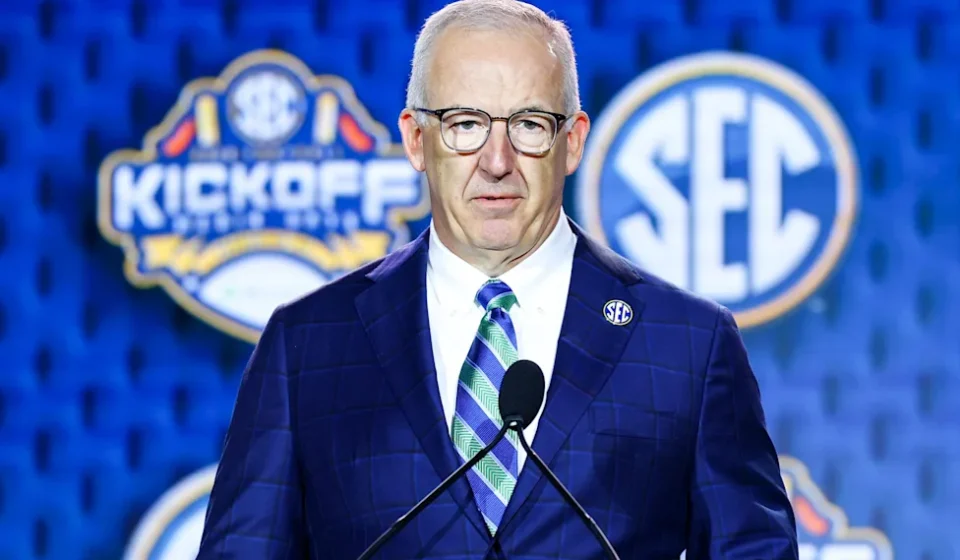
SEC Commissioner Greg Sankey has been given the authority to enforce the policy and impose penalties for violations. At the time the policy was announced, the specific penalties had not yet been detailed.
SEC Takes a Different Approach From the Big Ten
The SEC’s policy goes beyond professional football eligibility.
While the Big Ten has focused on restrictions involving former NFL players, the SEC has also included athletes connected to professional basketball. As a result, players with previous NBA or WNBA involvement could also be affected by the conference’s new eligibility standards.
The decision comes amid growing legal challenges involving athletes who previously signed professional contracts and later sought to return to college competition.
Court Cases Sparked the Eligibility Debate
Recent court decisions have placed renewed attention on whether athletes who previously entered professional sports should be allowed to regain college eligibility.
Former Ole Miss tight end Dae’Quan Wright became a central figure in the debate after a Louisiana court ruled that he could pursue an additional year of college eligibility following his time with the Cleveland Browns.
Wright was later released by the Browns and reportedly planned to continue his college football career at LSU.
The debate has also extended to basketball. A court decision involving RJ Luis Jr. allowed him to continue pursuing college eligibility despite his previous NBA contract situation, adding further pressure to the broader discussion surrounding professional experience and NCAA eligibility.
Could Other Major Conferences Follow?
The SEC may not be the only major conference considering additional restrictions.
According to reports surrounding the policy debate, the ACC, Big 12 and Notre Dame have also explored similar approaches. If other conferences introduce comparable rules, restrictions on former professional athletes returning to college sports could eventually become a broader standard across the Power Four landscape.
That possibility could significantly change the future options available to athletes who leave college, enter professional sports and later seek to return.
Legal Concerns Surround the New SEC Policy
The SEC’s decision has also generated criticism from attorneys representing athletes affected by these eligibility disputes.
Attorney Ryan Downton argued that individual conferences could be attempting to create new restrictions in response to court rulings that have limited the NCAA’s ability to enforce similar eligibility standards.
He described the effort as potentially resembling coordinated conduct by major conferences attempting to respond to legal decisions on athlete eligibility.
The legal debate is likely to continue as courts, conferences and the NCAA confront new questions about the relationship between professional contracts and college sports participation.
What the New SEC Rule Could Mean for College Sports
The SEC’s new policy could have consequences far beyond a single conference.
For athletes, the rule may reduce the possibility of returning to college after entering professional football or basketball. For schools, it creates a clearer boundary regarding which athletes can be added to their rosters.
At the same time, ongoing court cases could determine how effective or legally sustainable such restrictions will be.
The situation highlights the rapidly changing nature of college athletics, where conference rules, NCAA policies and court decisions increasingly intersect.
Conclusion
The SEC has drawn a clear line on the issue of former professional athletes returning to college sports.
By unanimously approving a policy that restricts athletes with previous NFL, NBA or WNBA involvement, the conference has established a significant new standard for its member schools.
However, with recent court rulings challenging traditional eligibility restrictions and other major conferences considering similar policies, the debate is far from over. The future of college athlete eligibility may ultimately depend on how these new conference rules hold up against continued legal challenges.